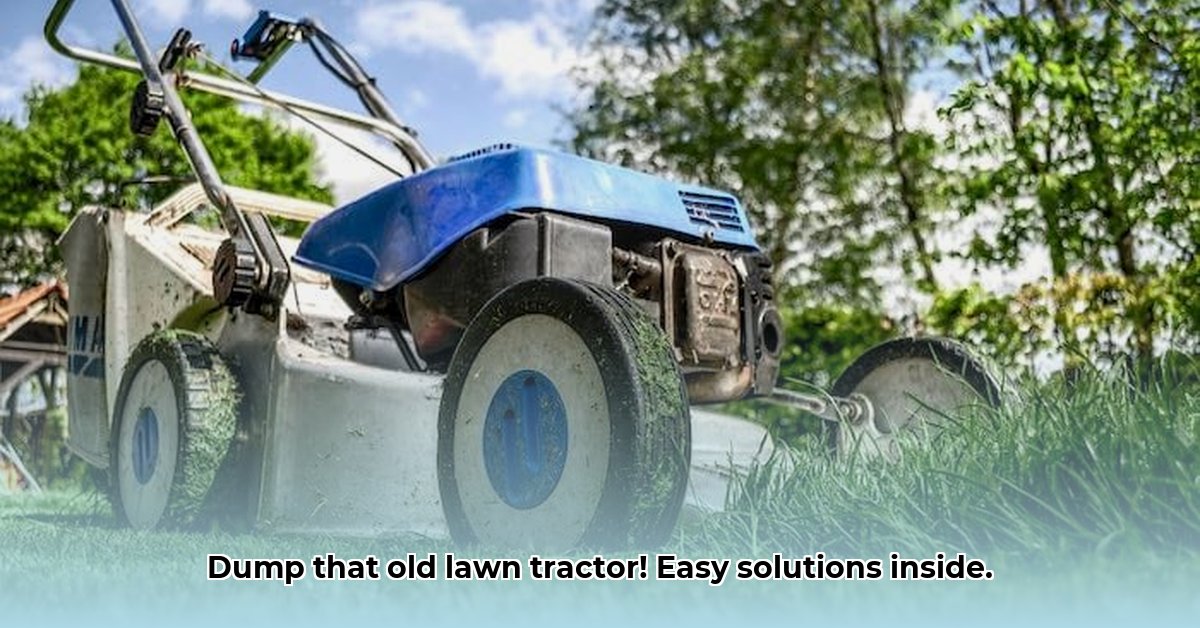
Getting rid of an old lawn tractor can seem daunting, but with a little planning, it's manageable and environmentally responsible. This guide provides clear steps and resources to help you dispose of your old tractor efficiently. For help with a specific part, check out this guide on tractor tire removal.
Assessing Your Old Lawn Tractor
Before you begin, evaluate your tractor's condition. Is it functional, or is it beyond repair? This determines your disposal options. A working tractor has more potential resale or donation value.
Your Disposal Options
Several options exist for disposing of your old lawn tractor:
Selling: If your tractor is in good working order, selling it online or through local classifieds can recoup some of your investment. Consider factors like its age, condition, and features when setting a price.
Donating: Charities or community groups may accept a functional tractor. This is a great option if you prefer not to sell. Check with local organizations to see if they have a need for used lawn equipment.
Recycling/Scrapping: For broken-down tractors, recycling or scrapping is the environmentally responsible choice. Many scrap yards accept old metal, potentially offering a small payment for the scrap value. This process removes hazardous materials from the environment.
Local Waste Management Facility: Your local waste management facility provides a final disposal option. They may offer a special pickup service or a designated drop-off area, but expect potential fees. Did you know that improper disposal of lawn equipment can result in fines?
Step-by-Step Disposal for a Broken-Down Tractor
For tractors beyond repair, follow these steps:
Drain Fluids: Safety first! Carefully drain all gasoline, oil, and other fluids. Dispose of them according to your local regulations (improper disposal can result in significant fines). Don’t forget to wear protective gloves and eyewear during this process!
Salvage Usable Parts: Before discarding, identify reusable parts like batteries or other components that can be recycled separately. Even small actions contribute towards environmental sustainability. Recycling is a key action towards environmental protection.
Contact Local Authorities: Call your local waste management department or a scrap yard for details about their procedures, accepted materials, and fees. They may require scheduling of pickup or drop-off. Planning ahead can simplify the whole process.
Legal and Environmental Considerations
Remember these vital points:
Local Ordinances: Research local laws and regulations about disposing of motorized equipment to ensure compliance. This proactive step avoids potential fines and ensures responsible disposal.
Environmental Responsibility: Choose environmentally friendly methods to minimize harm to the ecosystem. Recycling and scrapping are preferable to simply throwing away the tractor. Your efforts contribute to a cleaner environment.
Choosing the Best Disposal Method
Here's a summary table:
| Method | Tractor Condition | Pros | Cons | Typical Cost |
|---|---|---|---|---|
| Selling | Functional | Best financial return, convenient removal | Requires effort to find a buyer | Variable |
| Donating | Functional | Tax benefits (consult tax advisor), feel-good factor | Finding suitable recipient may be challenging | Minimal |
| Recycling/Scrap | Any | Environmentally friendly, potential scrap value | May incur transportation and/or processing fees | Variable |
| Waste Disposal | Any | Convenient, often scheduled pickup | Usually incurs fees, least environmentally friendly option | Fees apply |
Following these steps ensures responsible and efficient disposal of your old lawn tractor. Remember to prioritize safety and always check your local regulations.